

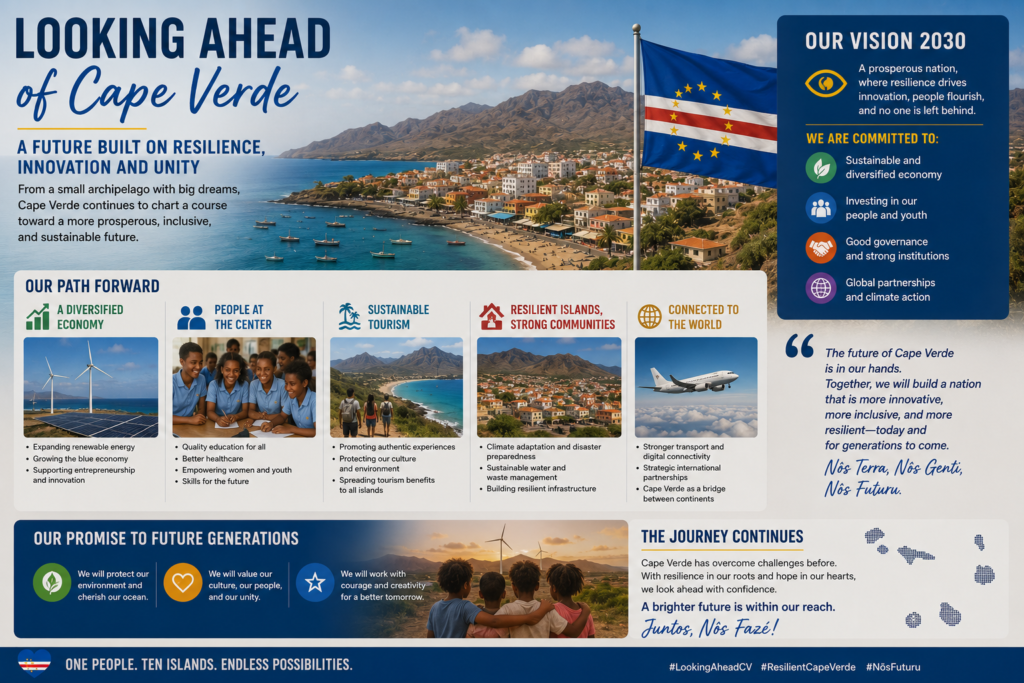
Cape Verde Located approximately 600 kilometers off the West African coast, the archipelago of Cape Verde (or Cabo Verde) has transformed from a quiet, volcanic chain of islands into one of Africa’s most stable and dynamic success stories. With a population of around 600,000, this nation proves that limited natural resources are no barrier to progress when built upon a foundation of political stability, education, and strategic vision.
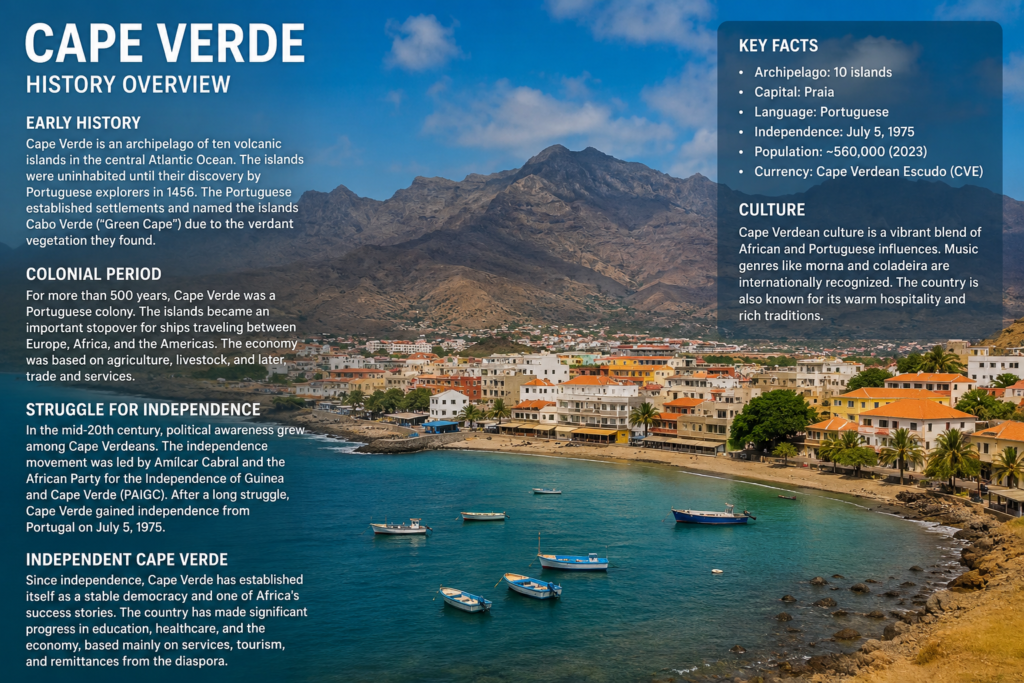
A History of Resilience
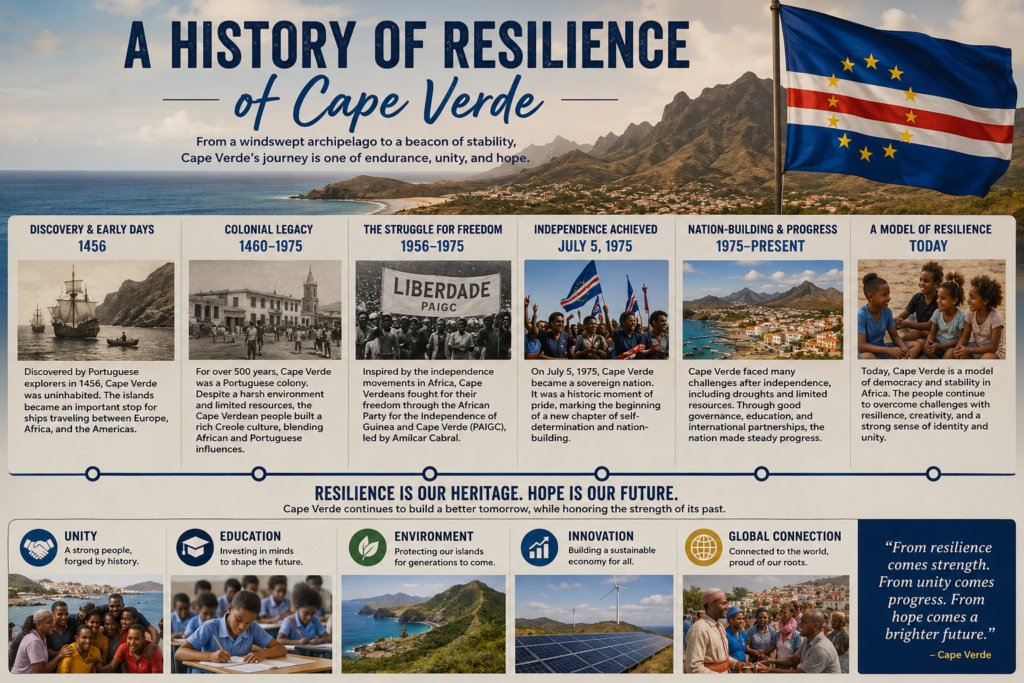
Historically, the islands were uninhabited until Portuguese explorers arrived in 1456. For centuries, Cape Verde served as a critical hub in the Atlantic slave trade (. Following a challenging past marked by severe droughts and water scarcity, the nation gained independence in 1975. Unlike many of its neighbors, the country successfully avoided the common pitfalls of civil war and political instability, instead fostering a robust democracy that serves as a beacon for the region.
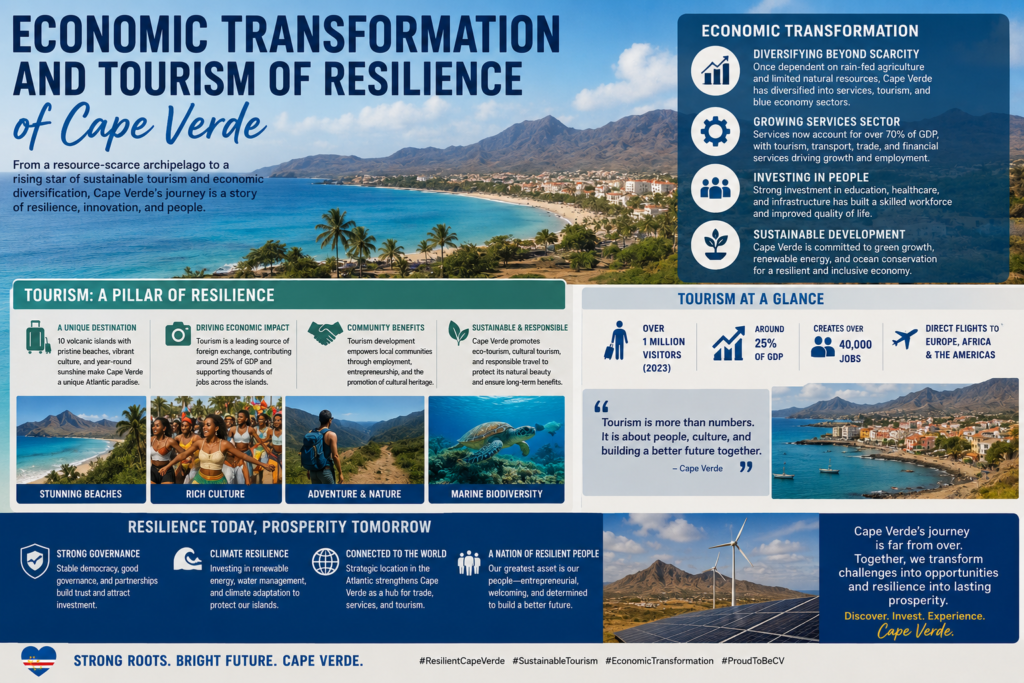
Economic Transformation and Tourism
In 2026, Cape Verde stands as a model of a “small open island economy.” While lacking vast mineral wealth or oil fields, the country has leveraged its breathtaking landscapes—volcanic peaks, pristine beaches, and clear Atlantic waters—to become a premier tourism destination. This sector is the primary engine of the national economy. Recent data from the first quarter of 2026 indicates a nearly 17% surge in guest arrivals, signaling a strong upward trajectory for the industry.
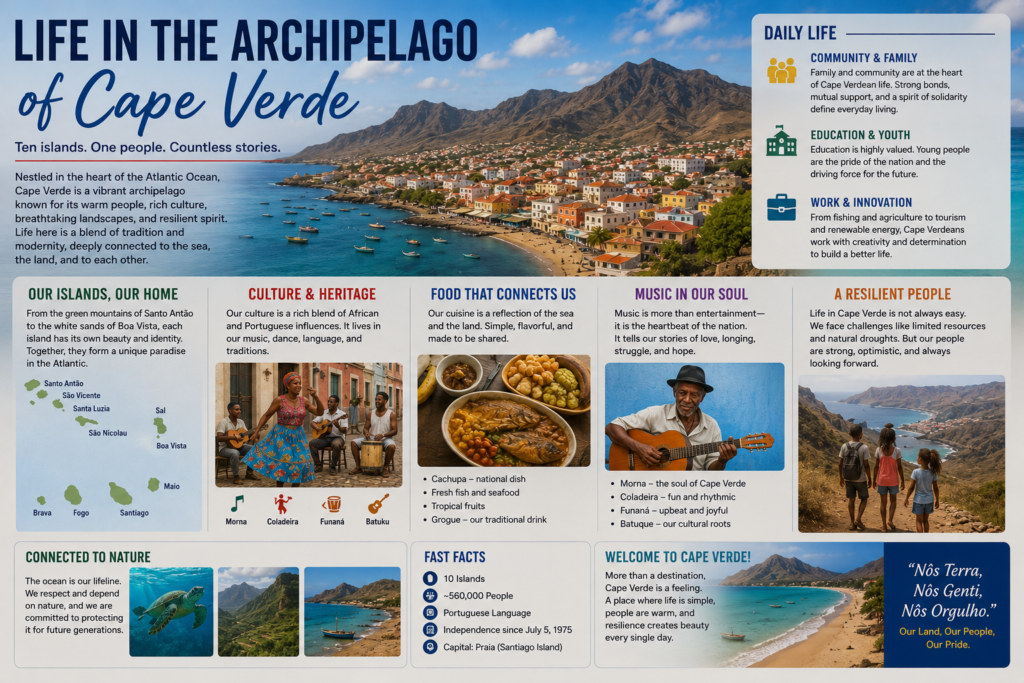
Life in the Archipelago
Cape Verde is renowned for its societal progress and safety. It is widely considered one of the most secure countries in Africa, offering a peaceful environment that encourages tourism and local growth. The country is also noted for its high level of gender equality; women are active participants in education, business, and politics, breaking away from the traditional constraints seen in some other regions.
Culturally, the country is a melting pot, with a population that is 90% Christian but deeply committed to religious tolerance. Despite the lack of permanent rivers, the nation has embraced modern technology, such as desalination plants, to ensure a stable supply of fresh water for its citizens.
Looking Ahead
The story of Cape Verde offers a compelling lesson: true national success is driven by governance, education, and social cohesion rather than raw resource extraction. As the islands continue to attract global interest, they maintain their identity as an “African hidden gem.” For travelers and observers alike, Cape Verde remains a testament to how a small, determined nation can navigate the challenges of geography and history to build a vibrant, sustainable future.
Cape Verde’s Awesome Contribution in FIFA World Cup 2026
Cape Verde has become one of the greatest success stories of the FIFA World Cup 2026. In their very first World Cup appearance, the Blue Sharks captured the attention of football fans around the world with their courage, discipline, and determination. Their journey proved that passion and teamwork can compete with football’s biggest nations.One of Cape Verde’s biggest achievements was qualifying for the FIFA World Cup for the first time in the country’s history. With a population of just over half a million people, they became one of the smallest nations ever to reach the tournament, making their qualification a historic milestone.During the group stage, Cape Verde impressed everyone with their organized defense, strong team spirit, and fearless performances. They remained unbeaten in their group and earned a historic place in the knockout stage, becoming one of the tournament’s biggest surprises. Their success inspired smaller football nations across the world to believe that dreams can become reality with dedication and hard work.